Striped mouse

Striped mouse

Striped mouse (Rhabdomys pumilio) on the cover of the August edition of Behaviour

Striped mouse (Rhabdomys pumilio) on the cover of the August edition of Behaviour
My photo and the accompanying paper (see List of publications) were published in this issue.

Friday, July 11, 2014

The evolution of paternal care

According to classic sexual selection theory, the lifetime reproductive success of males is predominantly determined by the number of matings achieved and the number of offspring sired, not the number of offspring helped to raise (Trivers 1972). This occurs as male mammals are unable to provide parental care during the prenatal period (Orians 1969; Queller 1997). However, the very occurrence of paternal care in some mammals indicates that the evolutionary benefits of providing care must have outweighed the costs associated with lost mating opportunities (Gubernick & Teferi 2000).


Two hypotheses, that are not mutually exclusive, have been proposed for the evolution of paternal care, namely the “mating constraints hypothesis” (Orians 1969; Queller 1997) and the “male care hypothesis” (Smuts & Gubernick 1992). The “mating constraints hypothesis” proposes that males that are ecologically and/or socially constrained from securing additional reproductive opportunities will provide paternal care (Orians 1969; Queller 1997). Mating behaviour is often regulated by social conditions, in particular, population density, which in turns regulates whether males remain with females or move on to find additional opportunities. This is classically observed in African striped mice Rhabdomys pumilio (Fig. 1). When population density is low, males adopt a roaming strategy, visiting several females and showing no paternal care (Schradin 2008). In contrast, when population density is high, males become territorial breeders, defending a group of females and showing paternal care (Schradin 2008).

Fig. 1 African striped mice Rhabdomys pumilio 
(Lars Müller: picture accessed 12 July 2014; 14h30)
(http://www.stripedmouse.com/site1_1.htm)

The “male care hypothesis” predicts that males will provide care under three circumstances (Smuts& Gubernick 1992): 1) When the certainty of paternity is low, males will provide paternal care in exchange for future mating opportunities. Low certainty of paternity should place strong selection pressure on males not to provide care to young that are unlikely to be kin (Møller & Cuervo 2000) as providing care is energetically expensive and could influence a male’s ability to breed the following season (Houston et al. 2005). However, staying with the female and caring for her young could lead to the formation of a pair bond and further matings, which increases the certainty of paternity later. Furthermore, even though a male may show decreased body condition by caring, the costs could be offset by the benefits gained through raising strong, healthy offspring. This is seen in owl monkeys Aotus azarai (Fernandez-Duque et al. 2008; Wolovichet al. 2008; Fig. 2). 

  
Fig. 2 Owl monkeys Aotus azarai 
(Unknown. Picture accessed 12 July 2014; 14h25)

2) Males will provide care when the certainty of paternity is high, as providing care to biological offspring increases the father’s lifetime reproductive success if the offspring survive to reproduce themselves; and 3) Males may provide care when it provides a direct benefit to the offspring, through enhanced development, growth or survival. For example, rodent pups require exogenous heat (through huddling) to ensure growth and survival, as they are unable to thermoregulate (Wang & Novak 1994). By providing care, males reduce heat loss from their young and enhance their survival, thereby enhancing their survival and growth, as seen in California mice Peromyscus californicus (Gubernick & Teferi 2000; Fig. 3). It is thought that this last circumstance is the most likely explanation for the evolution of paternal care (Woodroffe & Vincent 1994).

Fig. 3 California mice Peromyscus californicus 
(Unknown. Picture accessed 12 July 2014; 14h35) 

In my next blog, I’ll take you through the development of paternal care. 

Thursday, July 3, 2014

Introducing paternal care


I recently assigned our second year evolutionary biology students the task of creating a blog dedicated to some aspect of evolutionary biology. They did an amazing job, so much so that I’ve decided to change my blogging to express a little more closely my biological interests, rather than just focusing on a particular journal article. I thought I’d start by focusing the next few blogs on one of my major interests, the development and expression of paternal care behaviour. 

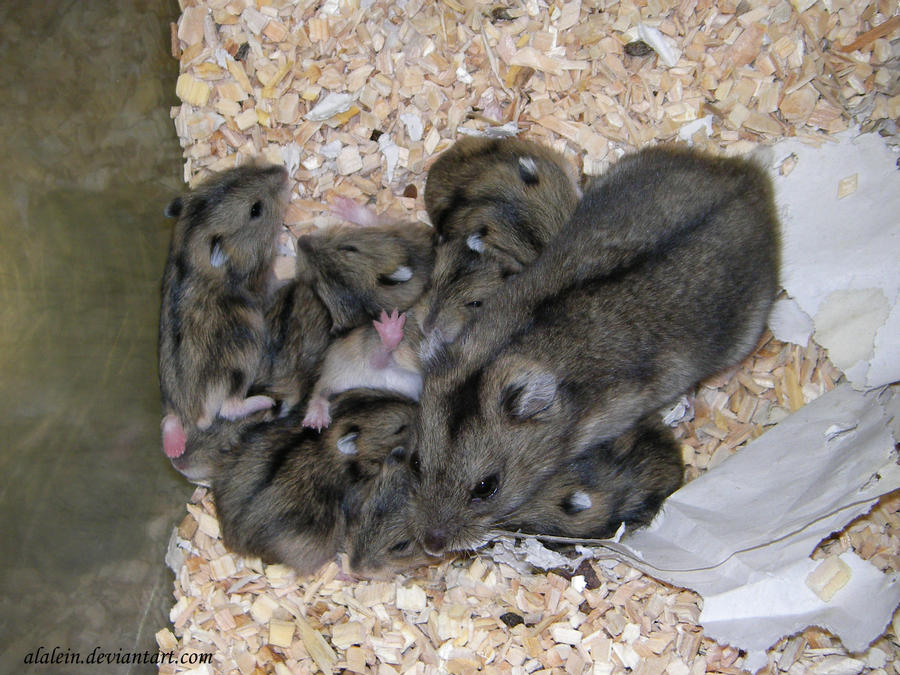
So, what is paternal care? Paternal care, as defined by Dewsbury (1985) and Woodroffe &Vincent (1994), is any direct or indirect non-gametic investment that is made by the father after fertilization that either directly or indirectly benefits his offspring. Direct paternal care includes behaviours performed in the young’s presence such as huddling (e.g. Djungarian hamsters Phodopus sungorus; Fig. 1), grooming, retrieving, providing food, defending against predators, babysitting or socializing (Malcolm 1985).

Djungarian Hamster Family by Alalein            
Fig. 1 Djungarian hamster Phodopus sungorus                    
(Alalein: picture accessed 04 July 2014; 15h26)
(http://www.deviantart.com/morelikethis/artists/310003570?view_mode=2)       

Importantly, these behaviours can influence the survival, growth and behavioural and cognitive development of the young. Indirect paternal care includes behaviours performed in the absence of young, but which may still influence survival, growth and development. These behaviours can include alarm calling (e.g. California ground squirrels Otospermophilus beecheyi; Video 1), female care and provisioning and territory maintenance (Malcolm 1985).


Video 1 California ground squirrel Otospermophilus beecheyi alarm calling)
(Life at Laguna: video accessed 04 July 2014; 15h26)
(http://www.youtube.com/watch?v=RmfDbWH46bQ) 
 
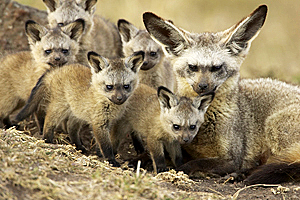
While paternal care is relatively common in birds, it tends to be quite rare in mammals, occurring in only 5-10% of species (Wright 2006). Paternal care has been recorded in six mammalian orders, namely carnivores (e.g. bat-eared foxes Otocyon megalotis, Wright 2006; Fig. 2), cetaceans (e.g. killer whales Orcinus orca, Lopez & Lopez 1985), diprotodontids (e.g. rock-haunting ringtail possums Petropseudes dahlia, Runcie 2000), primates (e.g. common marmosets Callithrix jacchus, Schradin et al. 2003; humans Homo sapiens; Quinlan 2003), lagomorphs (e.g. European wild rabbits Oryctolagus cuniculus; Cowan 1987) and rodents (e.g. African striped mice Rhabdomys pumilio, Schradin & Pillay 2003; Fig. 3). 

Fig. 2 Bat-eared fox Otocyon megalotis  
(Joe & Mary Ann McDonald: picture accessed 04 July 2014; 14h32)
(http://hoothollow.com/Trip%20Report%20-%20Kenya%20Nov-Dec%202005.html)


 Fig. 3. African striped mouse Rhabdomys pumilio
 (Tasmin Rymer: personal picture)

In my next blog, I’ll focus a bit more on the evolution of paternal care.

Friday, April 11, 2014

Summary: Dynesius & Jansson (2000)

Over the course of Earth's history, climates have varied widely. Some climate cycles are reported on the scale of 10-100 thousand years, such as Milankovitch oscillation. Milankovitch cycles have been demonstrated to influence the location and size of species geographical distributions. Dynesius & Jansson (2000) further suggest that Milankovitch cycles also drive geographical patterns of species diversity, polyploidy, degree of specializations and the dispersal ability of organisms. When species ranges  are influenced by these climate cycles, they can be termed ORDs, or "orbitally forced species' range dynamics". These ORDs may constrain short-term evolutionary processes. Although adaptations may accumulate between climatic shifts, they may be lost when the climate shifts, due to population extinction of variation in selection pressure. The size of ORDs varies on both temporal and spatial scales, and can function to decrease gradual speciation, increase species range size and proportion of polyploid species. ORDs favour dispersability and tend to favour generalizations. Dynesius & Jansson (2000) indicate that large ORDs can promote species persistence (neither extinction nor speciation) and that ORDs show a corresponding increase with latitude (although how these ORDs vary with longitude or altitude is not indicated). One of the latitudinal patterns observed by ORDs is Rapoport's rule - a gradient in species' range sizes and diversity. Dynesius & Jansson (2000) argue that ORDs of different strengths may explain several biological phenomena (i.e. one driving force as opposed to many). ORDs provide a new opportunity for developing conservation strategies on different environmental scales.

Thursday, April 3, 2014

Summary: Dukas & Jongsma (2012)

Female mate choice is common in the animal kingdom and females and males may come into conflict over a female's choosiness. In particular, males that are chosen less frequently by females may resort to forceful copulations in order to gain some reproductive fitness. In fruit flies Drosophila melanogaster, males may force-copulate with sexually immature females just after eclosion, a particularly vulnerable time for females. Although males only achieve approximately 20% of successful matings this way, the results for females are significant. Females suffer reduced longevity, high wing damage and show lowered reproductive success (through generation of fewer progeny, which they can still produce). Although females are capable of remating at sexual maturity after a forced copulation, mating is generally followed by a period of diminished receptivity and attractiveness, meaning that females may not be able to mate until a later time. Dukas & Jongsma (2012) quantified the effects of forced vs. consensual matings on the receptivity and attractiveness of females, to determine whether forcibly mated females are able to overcome the effects of mating by showing faster return to receptivity and attractiveness. Although forcibly mated females appeared as attractive as same-age virgins, and were more attractive than recently consensually mated females, Dukas & Jongsma (2012) found that they remated at a lower frequency than same-age virgins, but a higher frequency than recently mated females. In the case of fruit flies, it seems that males benefit through forced copulations by gaining some fitness benefits through generation of progeny. Although damaging to females, females are able to overcome this negative behaviour, and can gain matings later through return to attractiveness and receptivity (even if only partially).

Thursday, March 27, 2014

Summary: Montgomery (2014)

 Many mammals, including primates, play. Play includes those behaviours that appear incompletely functional, atypical, spontaneous and repeatable, and are elicited under conditions of low stress. Play is easy to recognize, but is often difficult to define. Play is primates occurs often, although nonadaptive and adaptive explanations for its occurrence are plentiful. In primates, social play has been linked to the relative size of various brain regions, including the neocortex, amygdala, cerebellum and hypothalamus, suggesting that play is involved in the development of cognition. These structures have also been shown to be involved in the ability to first predict, and then perform, sequential actions, indicative of behavioural flexibility. Using data on the frequency of social and nonsocial play in various primates, Montgomery (2014) attempted to find evidence that could directly link play to behavioural flexibility and/or brain maturation. He found that postnatal brain growth increased with the frequency of play and that measures of behavioural flexibility are associated with the frequency of play. Montgomery (2014) concluded by indicating that the results from this study provide an adaptive framework for play.